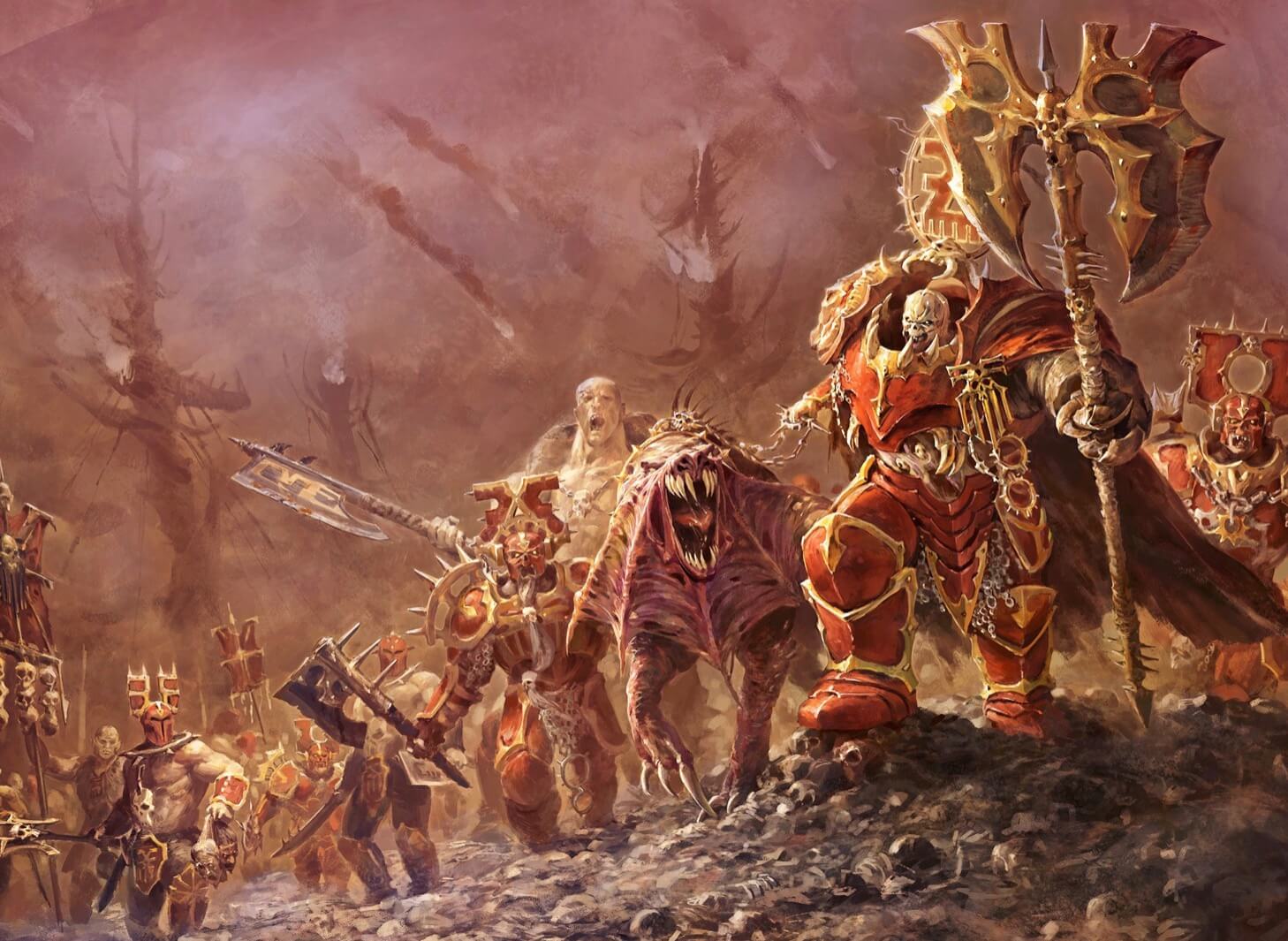
The Blades of Khorne are the warhost of the Blood God himself — worshippers who live only to spill blood and carve skulls for his ever-hungry Skull Throne.
They’re not subtle. They disdain magic. They crave melee. Their battlefield is their temple, their weapons the prayers, and their battles the means through which Khorne’s power grows.
What makes them compelling in lore is this combination of savage devotion + martial honour. They are brutal, but their brutality is sanctified in their own dark way. They are a fan-favourite faction, especially for players who love aggressive play and gritty visual style.
They can be made up of mortal bloodbound warriors (the Bloodbound) or daemonic entities. Together, they form a legion that doesn’t build cities — they leave ruins, they raise skull-altars, they propagate fear — because for them war is worship.
Gameplay Character: What Makes Blades of Khorne Powerful
If you’re considering buying used Blades of Khorne models — it’s worth knowing how they perform on the tabletop. Here are a few of their standout features:
| Strength | Why it matters |
|---|---|
| Brutal melee power | Blades of Khorne excel in close combat. Their units often do better in the fight phase than many others. |
| “Blood Tithe” / Killing Incentives | One of their signature mechanics is that every time a unit (friendly or enemy) is destroyed, you gain blood tithe points — which unlock bonuses or abilities during the game. That means you are rewarded for action and aggression. |
| Synergy of Mortals + Daemons | Battle Formations like Khornate Legion allow you to mix mortal Bloodbound units with daemonic ones for extra punch — a hybrid style that can be both thematic and tactically rewarding. |
| Strong Characters / Heroes | Legendary Blood God characters like Skarbrand, or powerful Bloodthirster units, give standout units that can swing a battle if used well. |
| Thematic Appeal | Beyond rules, there’s a huge aesthetic and narrative pull: red-clad warriors, savage iconography, rituals of blood, brutal statuary and architecture. If you like models with personality and a dark story, Khorne delivers. |
Gameplay Limitations & What to Watch Out For
No faction is perfect — and knowing the limitations helps potential buyers understand what they’re getting into (and also gives you talking points when selling). Here are some of the cons or trade-offs with Blades of Khorne:
| Weakness | How it impacts you |
|---|---|
| Limited or Non-existent Ranged / Magic Options | Khorne hates magic. They generally don’t rely on spellcasting or shooting. That means you’re often forced to get into melee to achieve your strategy. |
| High Cost / Points Efficiency Issues | Some builds are expensive in points, especially for competitive play. You’ll need to think carefully about which units you field, especially if your army is built from older models. |
| Techy or Complex Lists | Because they have a lot of bonus mechanics — battle formations, unlockable abilities via Blood Tithe, mixing mortals and daemons — it can be more complex than just “bring troops to fight.” There’s an element of list-building finesse. |
| Vulnerability Until Engaged | Because their strength is melee and aggression, if you cannot close the gap (due to positioning, opponent’s range or mobility), Khorne can sometimes suffer from being outmaneuvered or picked off at longer range before getting stuck in. |
Knowing these gives you a better chance to build or tweak a list that uses the models you have (or will sell) in the strongest way — and it’s attractive to potential buyers because you can show you understand how to play them well.
Why Buying Pre-Owned Painted Models Could Be a Great Choice
Here’s how you can turn lore & gameplay into selling points:
-
Instant visual impact — painted minis of Khorne (with their distinctive reds, brass, skulls, gore-flourishes) have immediate “grrr-power”. It saves buyers hours of painting before they can even field them in games.
-
Historical / thematic cohesion — if your set includes heroes (Blood-Bound champions or Bloodthirsters), large units of Bloodbound infantry, or daemonic allies, that gives someone a jump-start on creating a playable army, not just display pieces.
-
Built-in lore appeal — buyers who love Warhammer / Age of Sigmar lore might be drawn to owning Khorne because the faction is visceral, iconic, and packs plenty of personality. You can highlight that your models are for one of the “bloodiest” and most dramatic warhost factions.
-
Potential for competitive or casual play — even if someone doesn’t want to enter tournaments, Blades of Khorne work very well in friendly matches, narrative campaigns, or themed game nights. Pointing out key units (e.g. heroes, monsters) you own helps them see how far they’re ahead from “zero army”.